News


What are red-tinted glasses used for?
The curious effect of looking at the world through a crimson filter If you have ever seen a professional cyclist or a gamer wearing reddish-tinted lenses, you have probably thought they were simply an aesthetic choice designed to attract attention. However, a very curious optical phenomenon occurs in the brain the very moment light passes through that flame-coloured lens. It is not about seeing life more optimistically, but about a real change in the speed at which your eyes process what is in front of them. In fact, there is a scientific reason why this specific shade can give you a competitive advantage in a matter of seconds. To discover what happens to your vision when you put them on, keep reading. What red glasses are for and how they work The answer to what red-lens glasses are for lies in the physics of light. Lenses of this colour act as a filter that selectively blocks blue and green light rays, which tend to scatter vision more and create a visual “haze” effect. By allowing mainly red light waves to pass through, the eye experiences an immediate change: the outlines of objects become much sharper, and the contrast between the background and foreground elements increases considerably. The main uses of red-coloured lenses This type of sunglasses is not intended for an ordinary day out, but has very specific applications for performance and everyday well-being: Outdoor sports: They are a favourite among cycling, running and skiing enthusiasts. When the terrain changes rapidly between sunlight and shade, as it does in a forest, these lenses make it possible to identify stones, roots and potholes on the path clearly and well in advance. Changing or overcast light conditions: By enhancing contrast, they work wonderfully on days when the sky is completely overcast or grey. They make flat surfaces appear more three-dimensional, improving depth perception. Reduced fatigue in bright environments: They help relax the eye muscles when moving through environments with a great deal of visual stimulation, preventing you from having to strain your eyes to focus on a specific point. Frequently asked questions about red glasses Can red glasses be worn when driving at night? It is not recommended. As they are a filter that reduces the amount of certain colours entering the eye, at night they could restrict overall visibility too much and interfere with the correct perception of traffic lights or information panels. Do they cause eye fatigue if worn for many hours? No, certified red lenses do not damage or tire the eyes. The brain adapts after a few minutes and compensates for the tint, although when you take them off, your surroundings may appear slightly bluer for a moment. Do they protect against intense sunlight? Although they reduce brightness, their main purpose is to increase contrast. For a summer day at the beach in extremely bright sunlight, traditional dark lenses remain a more comfortable option.
View more
Best sunglasses for men
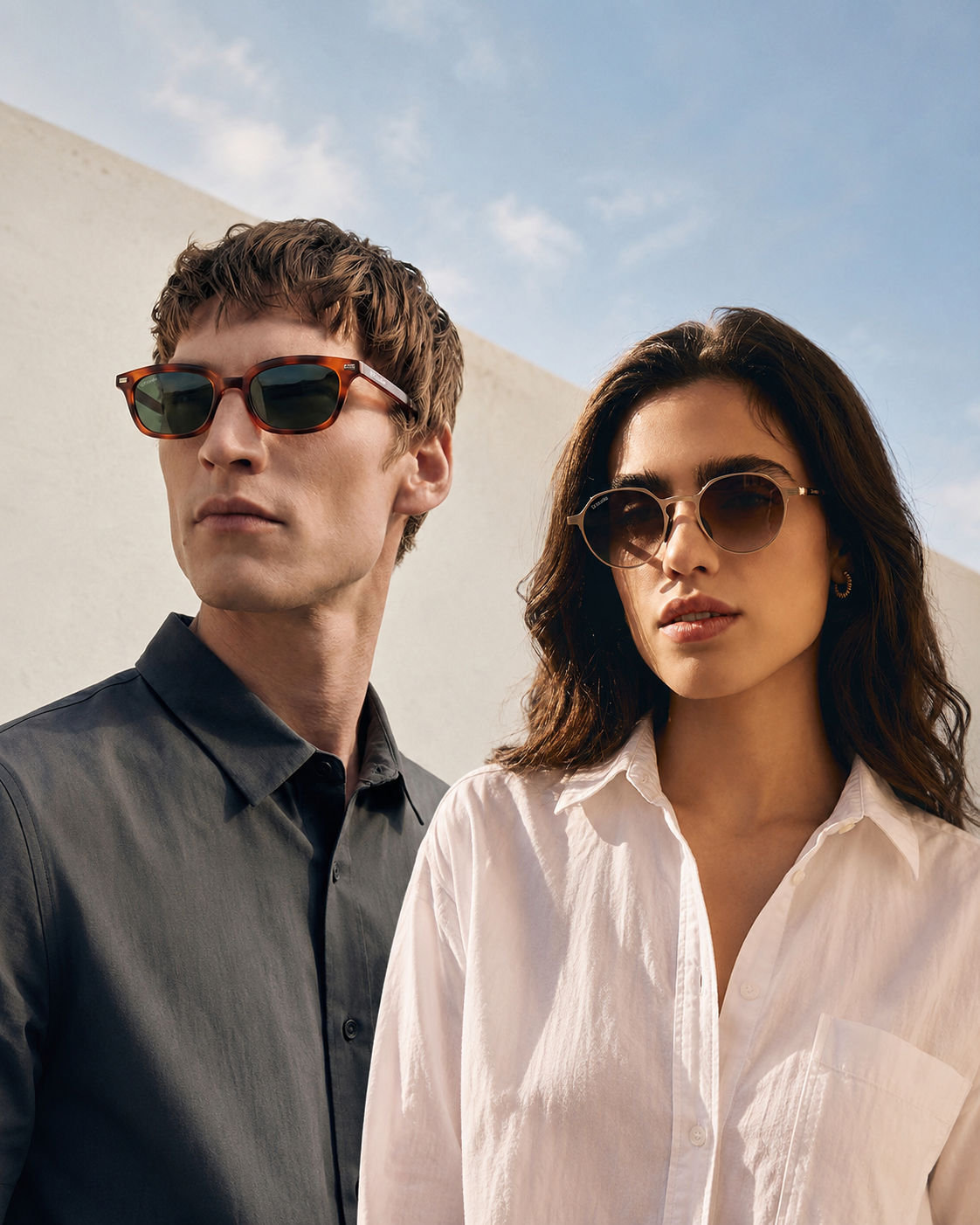
Choosing sunglasses is not just about buying an accessory to avoid glare. There is one detail that almost nobody pays attention to when trying them on in front of a mirror, yet it determines whether those sunglasses will make you look like a fashion expert or, on the contrary, work against you. If you want to discover that secret and learn how to find the sunglasses that suit your face shape best, keep reading. How to Choose the Best Sunglasses for Men? To find the best sunglasses for men, the first step is understanding ery frame suits everyone. Here are the key tips to help you make the right choice: Square Faces: If you have a defined jawline, rounded or oval-shaped frames will help soften your features. Round Faces: Rectangular or square sunglasses are ideal, as they help visually elongate the face and add more definition. Oval Faces: You're in luck—almost every style suits you! You can experiment with bolder designs. Lens Types: More Than Just Color Many people think that the darker the lens, the better the protection. This is a common misconception. When looking for the best sunglasses for men, you should pay attention to the quality of the lens filter: Polarized Lenses: Perfect if you drive or practice outdoor sports. They eliminate bright reflections from surfaces such as roads or water, providing much clearer vision. UV400 Protection: This is the standard that ensures your eyes are protected from harmful ultraviolet rays. At DFranklin, all our sunglasses meet this essential requirement. Gradient Lenses: Ideal for days with changing light conditions or when you need to clearly see your car dashboard while remaining protected from the sun above. Timeless Trends That Never Go Out of Style If you're looking for a safe choice, there are certain models that are always considered among the best sunglasses for men because of their versatility: Aviator Style: A classic design that adds a confident and adventurous touch. Tortoiseshell Frames: Perfect for a more elegant or intellectual look. Shield Sports Sunglasses: Currently very and futuristic style. At DFranklin, we combine lightweight materials such as polycarbonate and metal to ensure your sunglasses are durable while remaining so comfortable that you'll forget you're wearing them. Frequently Asked Questions What Does It Mean for Sunglasses to Be Polarized? It means they feature a special filter that blocks light coming from a specific direction, particularly reflections. This allows you to see more clearly without uncomfortable glare. Can I Wear Sunglasses on Cloudy Days? Yes, it is recommended. Even when there is no direct sunlight, UV rays can pass through clouds and still damage your eyes. Lighter or gradient lenses are an excellent choice for these conditions. How Do I Know if the Size Is Right for My Face? The temples should not press against the sides of your head, and the bottom of the frame should not touch your cheeks when you smile.
View more
What are blue light glasses used for?
You’ve probably ended the day with tired eyes, a slight headache, or found it hard to fall asleep after using your phone. There’s a hidden reason behind this that most people ignore, and it’s not just about screen brightness. If you want to know what’s happening to your eyes and how to avoid it easily, keep reading. What is blue light and why does it affect us? All the devices we use every day, such as computers, tablets, and mobile phones, emit a type of light called blue light. Although this light also exists naturally in sunlight, our screens expose us to it constantly and at a very short distance. Our eyes are not designed to filter this light naturally for so many hours in a row. That’s why, when we spend a lot of time working or playing in front of a screen, our eyesight can suffer and the use of blue light glasses is recommended. So, what are blue light glasses for? The main function of these blue light filter glasses is to act as a protective shield. They feature special lenses that filter the excess blue light emitted by screens. When you wear them, you may notice several benefits right away: They reduce eye strain: By blocking the most intense light, your eyes don’t have to work as hard to focus. This helps prevent that “sand in the eyes” feeling at the end of the day. They improve rest: Blue light tricks our brain into thinking it is still daytime, which slows down the production of melatonin, the sleep hormone. Wearing these glasses helps your body understand that it is time to rest. They help prevent headaches: Many headaches are caused by constant visual effort. By relaxing your eyes, these discomforts can be reduced. An accessory for everyday life The best thing about blue light glasses is that you don’t need prescription lenses to wear them. They are a visual health accessory. At DFranklin, we design models that not only protect you but also feature a modern style you can match with any outfit. If you spend more than three hours a day in front of a screen, these glasses are for you. It’s not just about fashion; it’s about taking care of what you use the most: your eyes. Frequently Asked Questions Can I wear blue light glasses if I don’t need prescription lenses? Yes, absolutely. Most people wear them without prescription lenses simply to protect their eyes from digital fatigue. Is it bad to wear them all day? No, it’s not bad, but they are specifically designed for when you use screens. If you’re walking outside or spending time in nature, they are not necessary, although they won’t harm you either. Do they really help you sleep better? Yes. By blocking the light that affects your sleep cycle, they help your brain relax naturally when night comes.
View more
Can you change the crystals on your sunglasses?
Your favorite sunglasses may be in perfect condition, except for one detail: the lenses are scratched or damaged. If you don’t want to get rid of them, replacing the lenses can be a good option. When should you replace the lenses in your sunglasses? Imagine your favorite D.Franklin sunglasses are sold out or part of a special edition, the frame is in good condition, but the lenses are scratched. What should you do? It may be a good time to try replacing the lenses in your sunglasses. Scratched lenses are one of the most common reasons why you may need to buy a new pair of sunglasses or replace the lenses. Even if they seem small, scratches on the lenses can affect your vision and become annoying with daily use. It is also recommended to replace the lenses when they have lost color or clarity, as some lens treatments wear down over time and no longer offer the same level of protection. If you notice blurred vision, reflections bothering you more than usual, or you simply want to improve your protection from the sun, it may be time to replace the lenses or buy a new pair of sunglasses. Types of sunglasses and how they affect lens replacement Not all sunglasses are taken apart in the same way. There are three main types: Sunglasses with screws These are the easiest. You only need a small screwdriver. Pressure-fit sunglasses The lenses are fitted into the frame. You need to apply a little pressure carefully. Sunglasses with nylon wire These are more delicate. It’s better not to try this without experience. Identifying the type of sunglasses you have is key before getting started. How to replace sunglasses lenses step by step Although this process is best suited to those who are a little more daring and handy, if you want to do it yourself, the most important thing is to work calmly and prepare the process properly. By following a few basic steps, you can replace the lenses without damaging the frame. 1. Prepare the space Work on a clean, soft surface to avoid damage. 2. Remove the old lenses If they have screws, loosen them If they are pressure-fit, push carefully Do it slowly to avoid breaking the frame. 3. Clean the frame Before inserting the new lenses, remove any dust or dirt. 4. Insert the new lenses Fit them in gradually until they are firmly in place. 5. Adjust and check Make sure they are properly positioned and do not move. A good fit prevents problems when wearing them. What to consider before buying new lenses Before replacing sunglasses lenses, there are several important aspects you should check to make sure the new ones fit correctly. The size and shape must match the original lenses exactly. It is also worth considering the type of lens, whether polarized, gradient, or mirrored, depending on how you use your sunglasses. Another key point is UV protection. Choosing quality lenses with good sun protection will help protect your eyes and maintain comfortable vision outdoors. Not all lenses fit every frame, so it is important to always check compatibility before buying them. Is it better to do it at home or go to a professional? The answer mainly depends on the type of sunglasses and your experience. In simple models, especially those with screws, replacing the lenses at home can be quite easy. However, when it comes to delicate frames, branded sunglasses, or more complex systems, going to a specialist can help prevent damage and ensure a better result. If you have any doubts, the best option is not to risk damaging the frame, especially if your sunglasses are valuable or difficult to replace. Frequently asked questions about replacing sunglasses lenses Can all lenses be replaced? Not always. Some sunglasses are designed in a way that does not allow the lenses to be removed without damaging the frame. Even so, most current models do allow lens replacement. How much does it cost to replace the lenses? The price depends on the type of lens and the quality you choose. If you want to avoid complications, take advantage of the special discounts available on our website and get yourself a new pair of sunglasses. Do they lose protection when the lenses are replaced? No, as long as you use quality lenses with proper UV protection. In fact, in many cases, you can even improve the protection compared to the original lenses.
View more
How to clean sunglasses without damaging them
You’ve probably cleaned your sunglasses with your T-shirt at some point… and then noticed those tiny scratches that weren’t there before. That small gesture could be damaging your lenses without you even realizing it. But don’t worry, because in this article you’ll discover how to clean your sunglasses properly and keep them looking like new for longer. Why it’s important to clean your sunglasses properly Sunglasses are not just a fashion accessory; they also protect your eyes from sunlight and help maintain comfortable, safe vision. When the lenses are dirty, not only do you see less clearly, but bacteria can also build up and the risk of scratching them increases. That’s why proper cleaning improves your vision and also extends the lifespan of your sunglasses. How to clean sunglasses step by step Follow these simple steps: 1. Wash your hands first Before touching your sunglasses, make sure your hands are clean. This helps prevent grease or dirt from transferring onto the lenses. 2. Use lukewarm water Place your sunglasses under a gentle stream of water. This removes dust without scratching them. 3. Apply neutral soap Use a small drop of mild, fragrance-free soap. Rub carefully with your fingers. 4. Rinse well Make sure to remove all the soap. Any residue left behind can leave marks. 5. Dry with a cloth Never use paper or clothing. Use a microfiber cloth to avoid scratches. Common mistakes when cleaning sunglasses There are some very common mistakes you should avoid. Cleaning your sunglasses while dry, using products with alcohol or ammonia, drying them with paper, or using any item of clothing are habits that can damage the lenses over time. Even if you don’t notice it at first, the damage gradually builds up. How often should you clean your sunglasses? When it comes to cleaning your sunglasses, ideally you should do it daily if you wear them often, or whenever you notice stains, dust, or fingerprints. Frequent cleaning prevents dirt from becoming embedded and makes it easier to keep the lenses in perfect condition. Extra tips to keep your sunglasses looking like new Small daily care habits can also make a big difference. Always store your sunglasses in their case when you’re not wearing them, avoid placing them lens-down, and don’t leave them exposed to the sun inside the car, as heat can deform the frame or affect the lens treatments. Whenever possible, use the original cloth that comes with them. Frequently asked questions about how to clean sunglasses Can I use wet wipes? Only if they are specifically designed for glasses. Regular wet wipes can damage them. Can alcohol be used to clean lenses? No. It can damage the lens treatment. What should I do if they are very dirty? Leave them in lukewarm water for a few seconds before cleaning them with soap.
View more
How to Choose the Right Sunglasses for Every Sport
You may already practise your favourite sport and have good technique… but there may be something holding you back without you even noticing. The sunglasses you wear could be affecting your performance. Yes, it’s that simple. Choosing the wrong pair can make you see worse, feel uncomfortable, or even fail to protect your eyes properly. But don’t worry, because here you’ll learn which sunglasses to choose depending on the sport, easily and without complications. Why it’s important to choose the right sports sunglasses Not all sunglasses are suitable for every sports activity. What works for running may not be useful for cycling, water sports, or mountain activities. Each sport requires specific features. In some cases, you need greater protection from the wind, while in others the most important thing is reducing reflections, preventing the lenses from fogging up, or making sure the sunglasses stay firmly in place during movement. Choosing the right sports sunglasses improves comfort, stability, and visual safety. In addition, good sun protection helps reduce eye fatigue and protects your eyes from ultraviolet rays during training and competitions. Which sunglasses to choose depending on the sport When choosing sports sunglasses, it’s important to consider the environment, the intensity of the light, and the type of movement you perform. Here are some recommendations depending on each sport. Running and cycling sunglasses You need lightweight sunglasses that stay in place. Key features: Wraparound lenses, which protect from the wind Good ventilation High UV filter This helps prevent watery eyes, dust, and glare. Mountain sports sunglasses: hiking and trail running Here, sunlight is stronger and more changeable. Look for: Polarized lenses UV400 protection Resistant frame Visibility in the mountains is key to avoiding accidents. Water sports sunglasses The reflection from the water is very intense. The ideal choice: Polarized lenses Secure fit Water-resistant material They reduce reflections and improve what you see both in and out of the water. Racket sports sunglasses: padel Here, you need stability and safety. Recommended: Well-fitting sunglasses Impact-resistant lenses Comfortable design They help prevent the sunglasses from falling off or breaking during the game. Snow sports sunglasses: skiing and snowboarding The light is very strong because of the reflection. Choose: Lenses with a high filter Side protection Anti-fog protection This will help you avoid glare and blurred vision. Types of lenses and which one to choose In addition to the frame, the lenses play a key role when deciding which sunglasses to choose depending on the sport. Polarized lenses are ideal for reducing reflections and improving vision on surfaces such as water, roads, or snow. Photochromic lenses, on the other hand, automatically adapt to the amount of light and are very useful in sports where lighting conditions change. There are also mirrored lenses, which help reduce sunlight intensity and provide extra protection in very bright environments. Choosing the right type of lens is just as important as choosing a comfortable and resistant frame. Common mistakes when choosing sports sunglasses One of the most common mistakes is using fashion sunglasses for sports. Although they may look good aesthetically, they often do not offer the necessary protection or stability. Another frequent mistake is not checking the UV protection level. Dark sunglasses without the right filter can actually be even more harmful to your eyes. It’s also important not to choose sunglasses based only on design. Fit, comfort, and functionality should always be the priority when practising any sports activity. Frequently asked questions about which sunglasses to choose depending on the sport Can I use the same sunglasses for every sport? It is not the most recommended option. Each sport has specific needs, and using sunglasses adapted to each activity improves comfort and visual protection. Are sports sunglasses mandatory? They are not mandatory, but they are highly recommended. They help protect your eyes from the sun, wind, dust, and possible impacts. What does UV400 mean? It means that the sunglasses block 100% of ultraviolet rays, offering complete protection against solar radiation.
View more
D. Franklin and PlayStation: this is what the new Saros glasses are like
This strategic alliance between the Spanish fashion brand and the renowned interactive entertainment company brings the light-dark duality of planet Carcosa to life through an exclusively designed accessory. Sony Interactive Entertainment Spain (SIE Spain) and D.Franklin present the result of a shared vision: a limited-edition pair of sunglasses that connects the PlayStation ecosystem and the astronomical essence of the video game with cutting-edge design. This collaboration not only celebrates the launch of Saros, but also materializes the atmosphere of the game in a piece of optical technology that reacts to its surroundings, just as a player would within the universe of Saros. The eclipse as a driving force behind the design The narrative of Saros unfolds on the enigmatic planet Carcosa, where solar eclipses are not only a visual phenomenon, but also a key gameplay mechanic that alters the hostility of the environment. Just as the stars dictate fate in Saros, and inspired by this vital contrast between light and shadow, D.Franklin has developed a piece that “lives its own eclipse”. Thanks to the integration of Blue Light Photochromic technology, the sunglasses offer an unprecedented dual functionality: they protect the eyes from screen exposure and dynamically darken or lighten their lenses and frame, automatically reacting to the intensity of sunlight. A collaboration that goes beyond the screen For Daniel Esquitino, Chief Product Officer at D.Franklin, the goal was clear: “Our aim was to encapsulate the light-dark duality of the video game in a single product. Thanks to Blue Light Photochromic technology, we have managed to make the sunglasses live their own eclipse, reacting to the environment just as the player does. In this way, we not only protect the eyes from screens, but also offer a dynamic accessory that automatically adapts to any light intensity.” Cristina Infante, Brand & Marketing Senior Manager at SIE Spain, highlights the importance of these synergies: “Projects like this allow us to make video games transcend their own nature and enable fans to enjoy the title in new ways.” Launch details In addition to Spain, the limited edition will be available in Portugal, Italy, Croatia and Greece. Note: These sunglasses are designed for daily light protection and are not certified for direct viewing of solar eclipses. About Saros The PlayStation®5 exclusive title invites players to embody Arjun Devraj on a mission to uncover the dark secrets of Carcosa. The game is now available on PlayStation Store and at regular retailers. About D.Franklin Founded in 2014, D.Franklin is a benchmark in Spanish urban fashion, known for its ability to fuse global New York trends with an avant-garde and free-spirited style. About Sony Interactive Entertainment A global leader in digital entertainment, SIE is responsible for the PlayStation® brand, delivering constant innovation since 1994 through its family of market-leading products, services and software titles.
View more
When to Wear Yellow-Tinted Sunglasses
Yellow Lens Glasses: What Are They For and When Should You Use Them? More and more people are adding yellow lens glasses to their daily routine, and it is not just a retro-inspired aesthetic trend, but rather there is a technical explanation behind it. Sunglasses with yellow lenses mainly work as a contrast filter, improving visibility in conditions where light is low or diffused. Their ability to filter certain types of light makes them a useful tool in very specific situations. Although for years they have been associated with sports contexts or professional driving, today their use has expanded. Using this type of lens means understanding when and under which specific conditions they work best. At D.Franklin, we explain exactly what they are for and when it makes sense to use them, what their real advantages are, and when they fit your lifestyle to improve your vision. What Are Yellow Lens Glasses? Yellow lens glasses are a type of eyewear that feature lenses with a color filter designed to improve visual contrast. They belong to the category of selective filters, in a tint that acts on the light reaching the eye, reducing certain reflections and enhancing the perception of details. Unlike dark lenses, they are not intended to block large amounts of light, but rather to reduce scattering and optimize visual quality in low-light environments. What Are Yellow Lens Glasses Used For? They improve contrast The yellow filter helps distinguish contours and textures more clearly, which is especially useful in environments where light is diffused or there is low visibility. They reduce glare Although they do not completely eliminate brightness, they do soften reflections coming from artificial lights or wet surfaces, providing more comfortable vision. They improve vision in adverse conditions In situations such as fog, rain, or dusk, yellow lens glasses make it easier to perceive the surroundings, increasing safety in activities such as driving. They reduce eye strain They brighten vision, making the surroundings appear clearer, and filter certain types of artificial lighting, easing the strain on the eyes. When to Use Yellow Lens Glasses Yellow lens glasses are highly effective in specific contexts, but they are not a universal solution. To get the most out of this type of eyewear and benefit from its functionality in situations such as: Night driving or low-light conditions: One of the most common uses, because they help reduce the impact of headlights and improve road perception. Cloudy or foggy days: They increase the definition of objects and make visual orientation easier by removing that “grey veil” from low-light environments. Sports activities: They are used in outdoor sports where contrast is important, such as cycling, running, tennis, and shooting, where seeing details quickly is crucial. Screen use: Some people use them to reduce eye strain in front of screens, as they filter part of the blue light depending on the type of lens and the specific treatment. Advantages and Limitations of Yellow Filter Lenses Before choosing this type of eyewear, it is worth understanding what yellow filter lenses can offer and what they cannot. Advantages of yellow lens glasses They improve depth perception. They reduce eye strain in certain environments. They increase clarity in low-visibility conditions. Limitations of yellow filter lenses They do not replace conventional sunglasses with UV protection. They are not effective in strong light. They may cause color distortion. Differences Compared with Other Tinted Lenses Yellow lens glasses do not serve the same purpose as other types of lenses; here are some of the most common comparisons: Dark lenses: They are designed to protect against intense sunlight, while yellow lenses aim to improve contrast in low-light conditions. Polarized lenses: They eliminate intense reflections, especially on surfaces such as water or asphalt, while yellow lenses work on contrast perception. Photochromic lenses: They adapt automatically to light, while yellow lenses maintain a constant effect on visual clarity. How to Choose Yellow Lens Glasses If you are thinking about adding them to your daily routine, it is important to consider these aspects before making a purchase decision: Lens quality: Make sure the filter is properly applied and does not distort your vision. UV400 protection: Even if the lens is clear and not intended for very bright conditions, protection against solar radiation is important in all types of eyewear for outdoor activities. Yellow tint: Some are very pale and work better for screens, while darker, almost orange shades are better for night driving and fog. Comfort: The fit should be correct to avoid discomfort during prolonged use. Intended use: Clearly define the situations in which you will use them to choose the right model. Yellow lens glasses are much more than a trend; they are becoming an ally for safety in different low-light situations. Although they are designed to improve vision in specific conditions, you do not have to give up style if you need them. If you are looking for better visibility, discover at D.Franklin all the options available in this type of yellow lens glasses and add that touch of style to your daily gear.
View more