You may also like
Photochromic Sunglasses
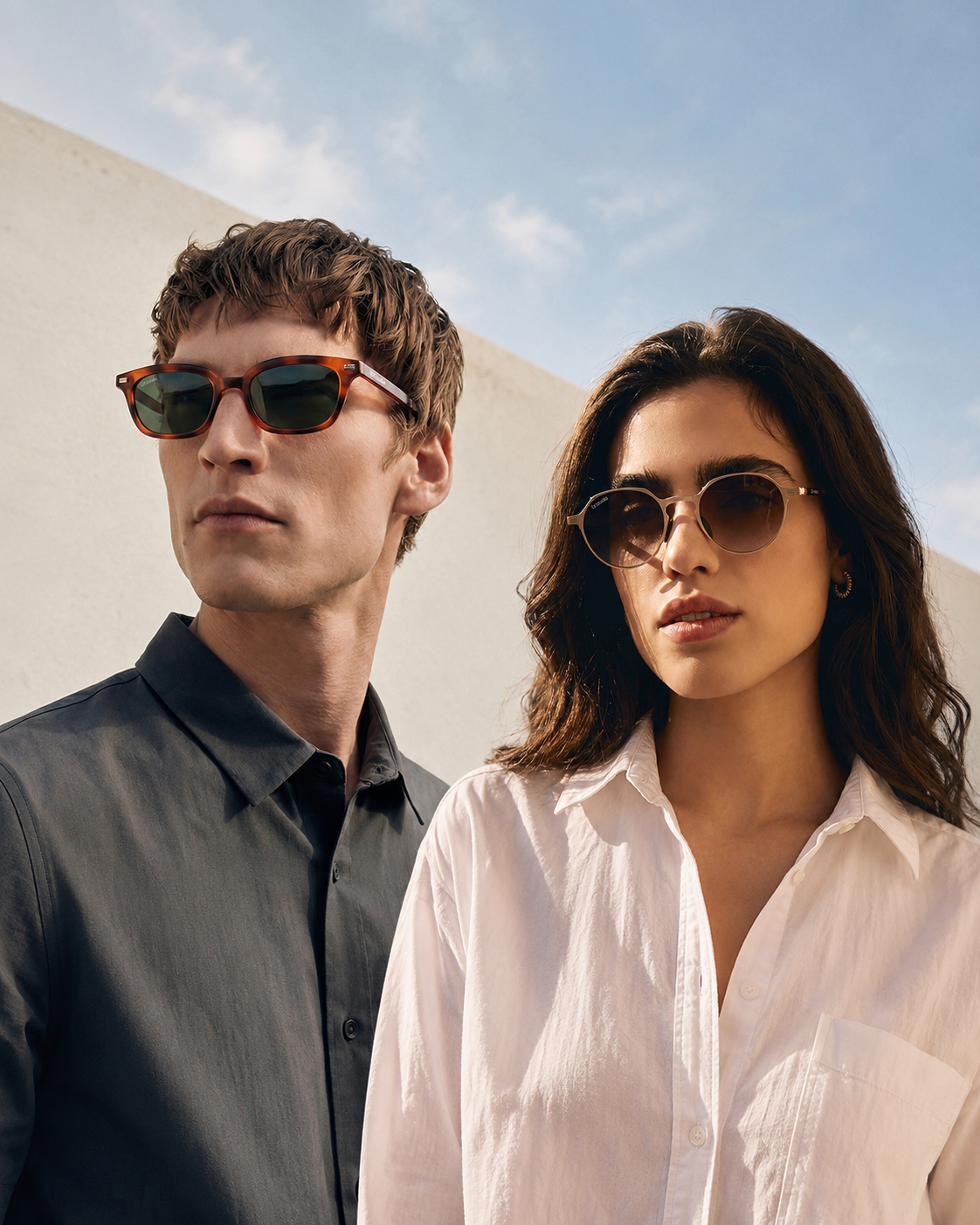
D.Franklin photochromic sunglasses feature lenses whose tint changes under the activation conditions stated for each design. The collection combines everyday frames and sports silhouettes with different shapes, materials and lens features.
Photochromic describes this change in tint. It does not alone identify polarisation, UV protection or filter category range. Compare these specifications separately and consider the environments where you intend to wear your glasses.
Read moreRead less
Compare Photochromic Lens Features
Check the stated range or category and the description of lens behaviour. Designs differ: do not assume fully clear lenses, identical final darkness or the same transition time across the collection. The finish's colour cannot replace those specifications.
For active use, explore photochromic sports sunglasses. Compare coverage, bridge support and temple position with your equipment. A wraparound appearance may suit your preference, but performance claims must come from the particular design's information.
Frames for Your Style and Use
For everyday wear, curved or angular lines change the front's presence, as do frame thickness and colour contrast. Compare women's sunglasses and men's sunglasses by measurements and shape, without assuming a gender label defines one size.
Use glasses that already fit well as a reference for front width, bridge and temples. Check that the frame does not touch your cheeks when smiling or press on your temples. If using a helmet or cap, try the combination in your activity's usual position to identify movement or pressure points.
Features to Distinguish
- Photochromic behaviour: tint change under stated conditions
- Polarisation: a separate feature that must be specified
- UV protection and filter category: check by variant
- Measurements, contact points and compatibility with accessories
Using and Caring for Your Lenses
Follow the lens and frame care instructions. Remove particles before using a clean microfibre cloth, avoid storing glasses loose among other objects and protect surfaces from rubbing and intense heat. Do not apply household cleaners assuming every treatment accepts the same care.
For a particular situation, such as driving or low light, check the design's stated suitability. The word photochromic does not establish that one lens covers every condition. Using this information lets you compare options beyond colour or shape alone.
Photochromic Sunglasses Questions
What changes when a lens is photochromic?
Its tint varies when activated under the manufacturer's stated conditions. It can therefore respond differently as the environment changes, but the extent of lightening and darkening belongs to each lens's specifications. They do not all share the same range.
Are photochromic sunglasses always polarised?
No. These are separate properties that can be combined in some designs. Look for an explicit polarisation specification if it matters to you; do not infer it from the word photochromic or a mirrored finish.
Do they all become completely clear indoors?
Do not assume this. Check the description of the starting tint and selected lens range. Some versions are described as clear indoors while others state different categories; do not transfer one version's behaviour to the whole collection.
How long does the tint change take?
Timing depends on the design and activation conditions. Check whether the lens information provides a specific figure. Avoid choosing on the assumption of an instant transition or one number of seconds for every variant.
Does tint change indicate UV protection?
No. A lighter or darker appearance and ultraviolet filtering need separate checks. Read the stated UV protection together with filter category; photochromic behaviour does not replace that information.
What should I check when wearing them with a helmet?
Look at temple positions against the helmet and straps, and whether the front stays in place as you move your head. Check coverage and lenses for the activity too. Comfortable fit without a helmet does not guarantee the combination works equally well.
Are they all suitable for driving or wearing at night?
Do not infer this from photochromic behaviour. Check intended use, category and stated lens response in that environment. If compatibility is not specified, do not choose the glasses assuming they offer it.

